Biometric Identification Solutions: Why They Matter and Why Your Organisation Should Care
The digital threats are becoming more advanced day by day and just using passwords, PINs or ID cards is not enough. Biometric identification solutions have provided a way of checking on identity using something inherent to a person, such as a fingerprint, face, iris or even the manner in which one walks. These advances are the future of identity, and essential for secure, trusted, and efficient systems.
Today, we’ll walk you through why biometric identity solutions are more relevant than ever, how they work, what the benefits and risks are, and how they integrate with other security measures like totp passcode and multi-factor authentication.
The Need for Biometric Identification Solutions
The Limitations of Traditional Methods
Passwords get forgotten. PINs get shared. ID cards get lost or stolen. These traditional ways of proving identity are fraught with risk:
- They rely on something you know (passwords) or something you have (ID cards), both of which can be compromised.
- Credential management becomes costly and cumbersome, especially for large organizations with many users.
- Weak or reused passwords remain one of the easiest attack vectors for cybercriminals.
Trends Driving Adoption
Organizations are being driven in the direction of biometric identity solutions by a number of forces:
- Digital Transformation: Organizations are becoming remote, distributed, and cloud-based, and this requires much more potent and frictionless methods of user authentication.
- Regulatory Pressure: Governments and regulators are tightening rules around identity, fraud prevention, and data protection.
- Rise in Identity Fraud: As fraudsters become more sophisticated, traditional credentials alone do not suffice.
- User Experience Expectations: People expect fast, frictionless access. Biometrics can streamline verification without compromising security.
How Biometric Systems Work
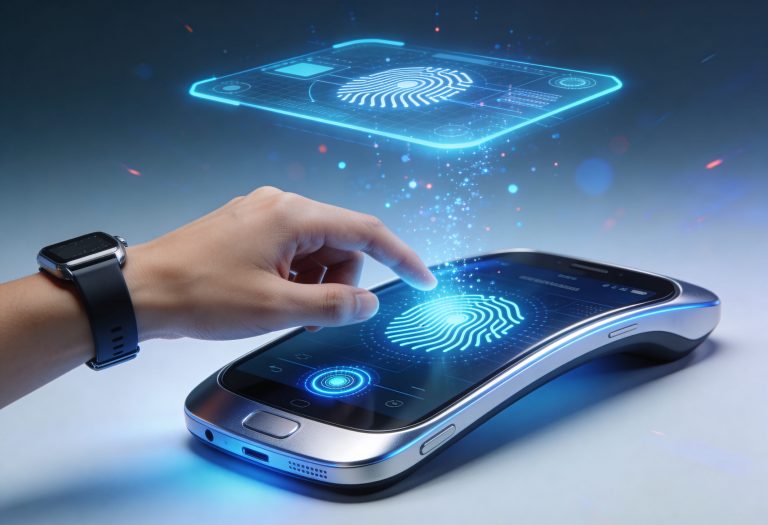
- Enrollment: The system captures a biometric sample (e.g., a fingerprint), processes it, and stores it as a template.
- Template Storage: The processed biometric data (template) is stored securely for future comparison.
- Matching / Verification: In a real-time scenario, a new sample is compared against stored templates to decide whether there’s a match.
- Decision: Based on similarity scores, the system allows or denies access.
Benefits of Biometric Identification Solutions for Organizations
Why should decision-makers, security managers, operations leads, executives, care about biometric identity solutions?
Here are the key advantages, from an expert’s perspective:
Stronger Security
Biometric traits are unique and inherently tied to a person, making them difficult to spoof or share. This greatly reduces identity fraud.
Better User Experience
Users don’t have to remember complex passwords. Biometric verification is fast, natural, and convenient.
Operational Efficiency
- Onboarding becomes faster: no manual checks.
- Less time spent managing credentials.
- Biometric logs provide audit trails, increasing accountability.
Scalability & Flexibility
Modern biometric identity solutions (especially cloud-based or modular systems) can scale as your organization grows.
Return on Investment (ROI)
While initial costs might be significant, biometric systems often pay for themselves via reduced fraud, lower credential-management costs, and improved productivity.
Compliance & Trust
With increasing regulation around identity and data privacy, biometric solutions (especially when built with privacy-preserving techniques) can help organizations meet regulatory expectations.
Integration with Other Security Controls
Biometric identification solutions don’t exist in isolation. They are most powerful when combined with other security measures.
Multi-Factor Authentication (MFA)
- Biometrics + TOTP passcode: This is a classic “something you are” + “something you know / have” model.
- By layering biometrics with time-based one-time passwords (TOTP), organizations can achieve much stronger assurance without compromising usability.
Identity and Access Management (IAM)
- Biometric identity solutions are increasingly being integrated into IAM frameworks.
- They support lifecycle management: enrolling users, updating templates, revoking access if needed.
- Biometric logs feed into IAM audit trails, giving clear traceability for access events.
Privileged Access & High-Security Scenarios
- For high-security facilities (data centers, R&D labs), biometrics can enforce very tight access control.
- In cases of elevated risk, adaptive biometrics (multi-modal, encrypted) can raise assurance without degrading performance.
Real-World Use Cases
In order to bring this to life, the following are a few of the applications of biometric identification solutions that are actually making a difference:
- Border Control / Automated Gates: The face and iris recognition are being used in the airports and at the border checkpoints to quicken the processing of passengers and enhance security.
- Secure Payments: Biometric payment systems (e.g., fingerprint on cards or phone) enhance transaction security and user convenience.
- Workforce Management: Biometric attendance system (fingerprint/facial) is used in organizations where there is a need to have clock-ins that are reliable and cannot be manipulated.
- High-Security Access: Data centers, labs, and sensitive infrastructure employ multi-modal biometrics (like vein + face) to strictly control entry.
- Financial & Identity Verification: Banks, FinTech’s, and digital services onboarding remotely are increasingly based on biometric identity verification and can reduce fraud and strengthen customer experience.
What Happens If You Don’t Adopt Biometric Identification Solutions
If you delay or avoid migrating to biometric identity solutions, the risks are not just theoretical, they are very real:
- Your organization remains dependent on less secure, easily compromised methods.
- Fraud, particularly identity fraud, may cost more and happen more frequently.
- Onboarding and identity verification remain manual and slow, reducing scalability.
- You may fall behind competitors who are investing in more modern, user-friendly identity frameworks.
- Regulatory non-compliance: as biometric systems become more standard, not using them may put you at a legal or competitive disadvantage.
ComSignTrust’s Role
At ComSignTrust, we don’t just believe in the potential of biometric identification, we have deep experience in designing, implementing, and managing secure biometric identity solutions for enterprise clients.
Conclusion
Biometric authentication solutions are fast becoming an essential part of modern-day identity solutions. At ComSignTrust we’re there to help you navigate this transition: from assessing your risk and designing your biometric solution, to implementing it safely, integrating it with your existing identity framework (including multi-factor authentication with TOTP passcodes), and helping you in the development of your system.
The next step is to contact us for a complimentary biometric risk assessment, or to start a pilot project. We can help you secure your identity infrastructure in a secure and responsible manner, while also gaining confidence.
FAQs:
What is biometric identification?
Biometric identification is the identification of a person who has special physical or behavioral characteristics. This involves fingerprints, facial features, eye patterns or even the manner in which one walks. It enables organizations to know who these people are without the use of passwords or ID cards. These solutions are used at ComSignTrust to ensure high security and at the same time convenience.
What is the difference between biometric identification and biometric verification?
Identification asks the question, “Who is this person?” The system compares the biometric data against many stored profiles. Verification asks, “Is this person who they claim to be?” Here, the system checks the data against a single, known profile. Identification is used for discovery, verification for confirming a claimed identity. Both have their place in secure systems.
Are biometric systems 100% accurate?
The accuracy will depend upon the type of biometric, the environment and the quality of sensors. False positives or the system getting the wrong person can occur, and false negatives or lack of recognition of the correct person can occur. The contemporary systems, particularly those that combine two or more biometric characteristics are very reliable. In ComSignTrust, systems are designed to reduce errors in order to ensure security.
Can biometric data be stolen or hacked?
Biometric data is sensitive and permanent. If it is compromised, it cannot be changed like a password. That is why secure storage and encryption are critical. At ComSignTrust, we use advanced template protection and privacy-preserving methods to prevent theft. Multi-factor authentication, including TOTP passcodes, can further strengthen security and protect your data.