The different types of biometric security include facial recognition, fingerprint recognition, iris scanning, voice recognition, and behavioral biometrics. Each addresses a distinct operational requirement and carries specific strengths, limitations, and deployment considerations.
The critical question is not which technologies exist. The real decision is which approach aligns with your organization’s risk profile, workflow requirements, and scale.
Biometric security is no longer a trend-driven investment. It is a control mechanism within enterprise identity architecture.
Why Businesses Are Re-Evaluating Identity
There was a time when access cards, PIN codes, and password policies were considered sufficient. That model is no longer adequate for modern threat environments. Today’s attacks increasingly target identity credentials rather than physical entry points. Credentials are shared. Cards are cloned. Password databases are harvested.
As a result, organizations have shifted toward biometric authentication because biometric traits are typically more resistant to replication than possession-based credentials when combined with liveness detection and anti-spoofing controls.
Enterprise authentication has evolved from what a user carries to who the user is.
1. Facial Recognition Security
Facial recognition has become one of the most widely deployed biometric authentication methods in enterprise environments.
Modern systems analyze complex facial feature vectors to generate secure biometric templates. These systems adapt to lighting variations and natural facial changes. Advanced devices can typically complete identity verification in under one second under optimal conditions, even in high-traffic environments.
Where It Works Best:
- Corporate headquarters
- Manufacturing facilities (especially where gloves are worn)
- Airports and border checkpoints
- Financial institutions
- High-volume employee entrances
Example
Consider a logistics hub where 800 employees enter within 20 minutes during a shift change. Card readers can create congestion. PIN-based systems slow entry flow. A facial recognition terminal enables rapid, contactless identity verification without requiring physical credentials.
This significantly reduces credential sharing risks and improves throughput. Advanced systems such as VisionPass devices can also integrate smart cards to enable multi-factor authentication (MFA) where higher assurance levels are required.
This reflects operational deployment in enterprise environments.
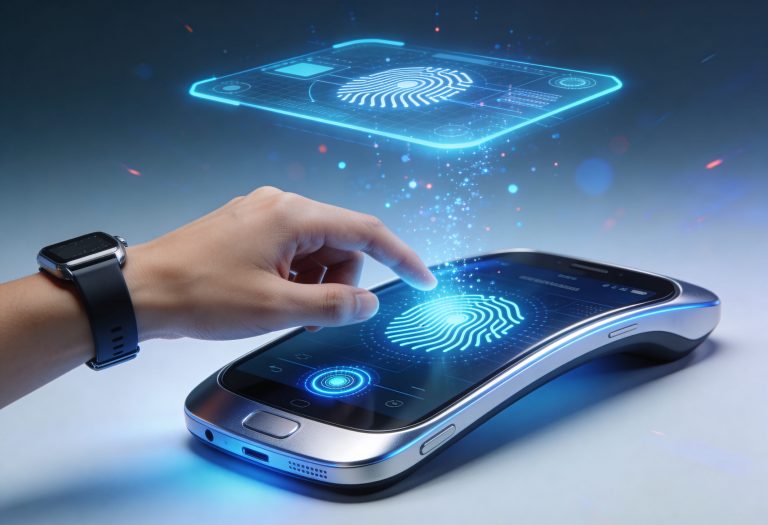
2. Fingerprint Recognition Security
Fingerprint recognition remains one of the most established biometric authentication methods.
Modern enterprise-grade systems include:
- Advanced presentation attack detection (PAD) to prevent spoofing attempts
- Rapid one-to-many matching
- Contactless scanning for hygiene-sensitive environments
- Integration with attendance and workforce management systems
- Multi-factor authentication capabilities
Devices such as MorphoAccess Sigma and MorphoWave XP + SP demonstrate how fingerprint recognition has evolved. Contactless technology can verify multiple fingerprints in under one second, reducing friction in high-security settings.
Where Fingerprint Recognition Works Best:
- Data centers
- Healthcare facilities
- Government institutions
- Time-and-attendance systems
- Secure research laboratories
Fingerprint recognition provides operational accuracy and reliability with strong anti-spoofing protection. However, it may not be optimal in environments where hands are consistently gloved, obstructed, or physically damaged. Environmental assessment is essential during solution selection.
3. Iris Recognition
Iris recognition is among the most precise biometric authentication technologies available.
It analyzes the unique patterns within the iris and generates highly distinctive biometric templates. When properly configured, iris systems offer very high accuracy and low false-acceptance rates.
Where It Fits:
- Military installations
- Critical infrastructure sites
- National laboratories
- Border control systems
The primary considerations are cost, deployment complexity, and user acceptance. Security controls must remain proportional to organizational risk exposure.
4. Voice Recognition
Voice biometrics authenticate individuals using unique vocal characteristics. This method is commonly deployed in:
- Banking call centers
- Remote authentication systems
- Customer service platforms
Voice authentication improves user convenience by reducing reliance on memorized credentials. However, modern implementations must include strong liveness detection and anti-spoofing controls to mitigate synthetic voice and replay attack risks. In higher-risk environments, voice biometrics are typically deployed as part of a multi-factor authentication framework rather than as a standalone control.
5. Behavioral Biometrics
Behavioral biometrics focuses on pattern-based identity verification.
These systems analyze:
- Typing cadence
- Mouse movement patterns
- Device handling behavior
- Navigation patterns
They operate continuously without requiring explicit user interaction, providing ongoing authentication validation. For online financial systems and enterprise platforms, behavioral biometrics are increasingly adopted as a complementary authentication layer in digital platforms. They do not replace physical biometrics. They complement them by adding continuous risk assessment.
How to Choose the Right Biometric Security Approach
Organizations should follow a structured decision framework:
- Assess Risk Level – Identify whether you are protecting intellectual property, financial systems, sensitive data, or physical facilities.
- Analyze User Volume – High-volume environments require rapid authentication methods such as facial recognition or contactless fingerprint scanning.
- Evaluate Environmental Conditions – Determine whether gloves are required, lighting conditions vary, outdoor exposure exists, or hygiene requirements apply.
- Review Integration Requirements – Confirm whether the biometric system integrates with HR platforms, ERP systems, identity management tools, and existing access control infrastructure.
Biometric software platforms play a critical role in ensuring centralized governance and lifecycle management.
Biometric Solutions for Access Control
Hardware alone does not provide comprehensive security. Modern biometric solutions focus on integrated identity-based architecture, including:
- AI-powered deep learning models to enhance identification accuracy
- Centralized biometric enrollment and deletion management
- Secure access control integration across enterprise systems
- Remote activation via Wi-Fi or 4G connectivity
- Support for smart card–based multi-factor authentication
- Centralized governance and audit controls
Effective implementation typically includes structured planning, deployment, and integration support to support operational continuity and regulatory alignment.
Protecting strategic assets requires integrated identity architecture rather than standalone hardware deployment. Biometric systems must be embedded within enterprise security infrastructure.
The Business Benefit:
When properly implemented, biometric security provides:
- Reduced fraud exposure
- Significant reduction in credential sharing
- Faster workforce movement
- Improved regulatory compliance posture
- Centralized identity governance
- Scalable authentication infrastructure
The objective is controlled, auditable identity verification aligned with governance policies. In modern enterprises, identity is foundational to security strategy.
Final Perspective
Biometric technologies are not competing solutions. They are complementary controls within a layered security framework.
- Facial recognition supports speed and high-throughput access
- Fingerprint recognition provides operational accuracy and reliability
- Iris recognition enables ultra-high assurance environments
- Voice biometrics support secure remote authentication
- Behavioral biometrics add continuous validation
The most effective organizations do not ask which single method is superior. They determine which combination aligns with their risk model, compliance requirements, and operational workflows.
That is how biometric authentication becomes a strategic component of enterprise security architecture.
FAQs:
How do biometric systems impact employee privacy compliance?
Organizations should ensure biometric data is encrypted in transit and at rest, stored as non-reversible biometric templates rather than raw images, and protected under access control policies in accordance with applicable regulations. Clear consent procedures and compliance with regional data protection regulations are essential.
Can different biometric authentication methods be combined?
Yes. Many enterprises deploy multi-modal systems combining facial recognition, fingerprint scanning, and smart card authentication to enhance assurance levels while maintaining operational usability, depending on risk profile. Multi-factor and multi-modal approaches significantly reduce spoofing risks.
What is the implementation timeline for enterprise biometric systems?
Implementation timelines vary based on organizational scale. A single facility may complete deployment within weeks, while multi-site enterprises typically require phased rollouts over several months, including integration testing and compliance validation.
How do biometric systems integrate with existing IT infrastructure?
Modern biometric platforms integrate via secure APIs with HR systems, ERP platforms, identity management tools, and centralized security dashboards. This enables unified governance, lifecycle management, and enterprise-wide audit visibility.