Identity has quietly become one of the most critical security controls in modern organizations. As systems move online, teams work remotely, and sensitive data is accessed from multiple locations, the question of who is really accessing systems carries operational, legal, and reputational consequences.
For many years, identity decisions were treated as technical implementation choices. Password policies, access cards, and tokens were considered sufficient. Today, those methods no longer meet the risk profile faced by organizations handling confidential information. They are also insufficient for regulated data or high-value digital processes.
This shift explains why senior leaders increasingly search for clarity around biometric identification. They are not looking for technology trends. They are seeking certainty. They want to understand whether biometric identification genuinely reduces risk, how it works in practice, and where it fits within a responsible governance framework.
What Is Biometric Identification?
Biometric identification is the process of identifying an individual. It works by comparing their unique physical or behavioral characteristics against stored biometric records to determine who they are.
This differs from simple authentication. Authentication confirms a claimed identity. Identification establishes identity directly.
When a biometric identification system is used, the individual does not state who they are. Instead, the system determines identity by matching biometric data against a database. This one-to-many comparison is what makes biometric identification powerful, but also more sensitive from a security and privacy perspective.
For decision-makers evaluating risk and accountability, this distinction matters. Biometric identification is not just another login method. It is a foundational identity mechanism.
Consequently, searches such as what is biometric ID “ and what is biometric identification system often come from leadership roles rather than technical teams.
What Is a Biometric Identification System?
A biometric identification system combines hardware, software, algorithms, and governance controls into a single, structured framework. It is designed to securely capture, process, compare, and manage biometric data.
At an organizational level, such a system is responsible for:
- Capturing biometric input from individuals
- Converting that input into a secure, non-reversible template
- Comparing biometric data against stored records
- Making identity decisions with defined confidence thresholds
- Maintaining auditability, integrity, and compliance
How Biometric Identification Works
Step 1: Biometric Data Capture
The process begins with capturing biometric data using a suitable sensor. This may involve:
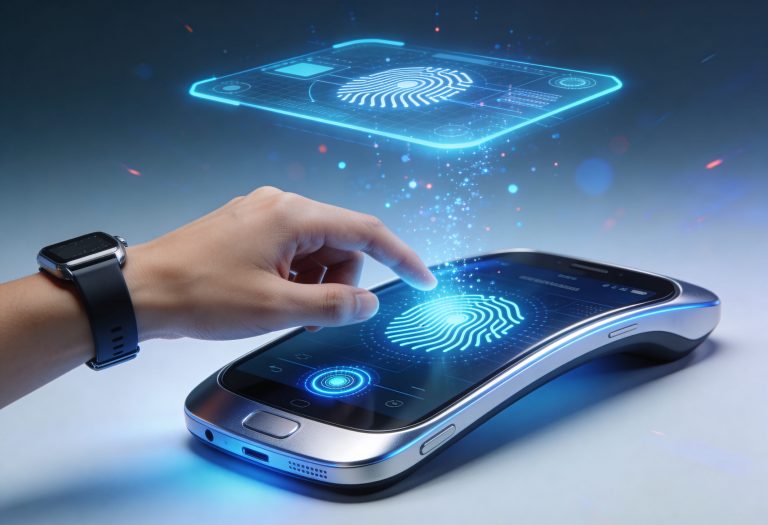
- A fingerprint scanner
- A camera for facial features
- A microphone for voice characteristics
- Input devices for behavioral patterns
The quality of capture at this stage directly affects accuracy and reliability.
Step 2: Feature Extraction
Captured biometric data is not stored in its original form. Instead, the system extracts defining features that distinguish one individual from another. These features are mathematical representations rather than visual records.
This step reduces privacy risk and improves matching efficiency.
Step 3: Template Creation and Secure Storage
Extracted features are converted into biometric templates. These templates are encrypted and stored securely within the system.
Strong identification solutions ensure templates are protected against unauthorised access and cannot be reused outside their intended environment.
Step 4: Matching and Identification
When performing identification, there is a comparison between the received biometric data and that stored in the system. This is a one-to-many comparison that identifies the individual as a match to a known identity in the system. False matches are controlled by applying confidence thresholds to make it reliable.
Step 5: Decision and Logging
Once a match is confirmed or rejected, the system records the outcome. Properly designed systems generate audit trails that support accountability, compliance, and investigation if required.
Why Traditional Identification Methods Fall Short
Identification methods used by many organizations are still based on a different threat environment.
The passwords, cards, and tokens do not belong to any individual. They are replicable, imperceptible, shareable, forgeable. These methods are susceptible to social engineering and credential theft even in two-factor authentication.
In organizations that want to protect sensitive data, this poses a continuous exposure. Incidents become difficult to trace. Responsibility becomes unclear. Risk increases over time.
Therefore, modern identification solutions increasingly incorporate biometric elements. By binding identity to the human factor, biometric identification changes the trust model itself. Access and approval are no longer based solely on what a user knows or possesses, but on who they are.
However, this strength also introduces responsibility. Biometric identification must be deployed with care, governance, and expertise.
Security, Privacy, and Governance Considerations
Biometric identification introduces higher assurance, but it also introduces responsibility.
Under the UK GDPR, identification based on biometric data is considered a special category of personal data. Organizations are thus required to establish need, reasonableness, and effective protection.
Key governance requirements include:
- Clear justification for biometric use
- Data minimization and purpose limitation
- Secure storage of encrypted biometric templates
- Defined retention policies
- Transparent communication with users
- Auditability and accountability
Failure to address these considerations undermines trust and exposes organizations to regulatory and reputational risk.
When Biometric Identification Should Not Be Used
Biometric identification is powerful, but it is not universal.
It may be inappropriate where:
- The risk profile does not justify biometric data processing
- User consent cannot be freely given
- Simpler authentication methods already meet security needs
- Governance and audit controls cannot be guaranteed
Responsible decision-making includes knowing when not to deploy biometrics. This judgement separates mature security programs from reactive ones.
How ComSignTrust Approaches Biometric Identification
At ComSignTrust, biometric identification is treated as part of a broader trust infrastructure rather than an isolated control.
Our work focuses on helping organizations deploy identification solutions that are:
- Aligned with regulatory expectations
- Integrated with enterprise systems
- Supported by certified digital identities
- Designed for long-term operational stability
Solutions such as BioLogon demonstrate how biometric identification can be embedded within multi-factor authentication and identity management frameworks, using fingerprint and facial recognition alongside other trusted controls.
This approach ensures biometric identification strengthens security without creating governance gaps or operational friction.
Making the Right Decision
For senior decision-makers, the central question is not whether biometric identification is advanced or innovative. It is whether it is appropriate, proportionate, and defensible.
Understanding what is biometric id in theory is only the beginning. Understanding how biometric identification fits within your organization’s risk model, regulatory obligations, and operational reality is what determines success.
Effective identification solutions do not simply prevent unauthorised access. They establish confidence, accountability, and trust across digital processes.
What to Do Next
If you are considering biometric identification, the most important step is informed evaluation.
This includes:
- Clarifying where identity certainty is required
- Assessing regulatory exposure
- Selecting biometric methods suited to your environment
- Ensuring integration with trusted identity and signing frameworks
Expert guidance at this stage prevents costly corrections later.
Biometric identification is not a technology trend. It is a governance decision with long-term implications.
Talk to an expert and contact ComsignTrust, before making that decision.
FAQs
What is biometric identification?
Biometric identification identifies a person using unique physical or behavioral traits. It determines who someone is by comparing their biometric data with stored records.
What is the difference between biometric identification and verification?
Identification asks who the person is. Verification checks if the person is who they claim to be.
How does biometric identification work?
The system captures biometric data. It converts it into a secure digital template. That template is compared with stored data to find a match.
What are the main types of biometric identification?
There are two main categories.
- Physical biometrics include fingerprint, face, iris, and vein recognition (e.g., using a fingerprint scanner to unlock secure systems or facial recognition to access a workstation).
- Behavioral biometrics include typing patterns, voice, and user behavior (e.g., detecting unusual typing speed or mouse movements to flag potential account compromise).